Samsung has once again launched its latest Galaxy Watch series alongside its new generation of foldable smartphones. This time, we have the Galaxy Watch9 series, available in both 40mm and 44mm sizes.
For this review, we are looking at the smaller 40mm model. While the Galaxy Watch9 may not look dramatically different from its predecessor at first glance, Samsung has made several under-the-hood changes and introduced a few new features to make the smartwatch more useful for health tracking and everyday use.
But with the overall design remaining familiar and battery life still being one of its limitations, is the Galaxy Watch9 a meaningful upgrade? Here’s what I found after using it.
Design

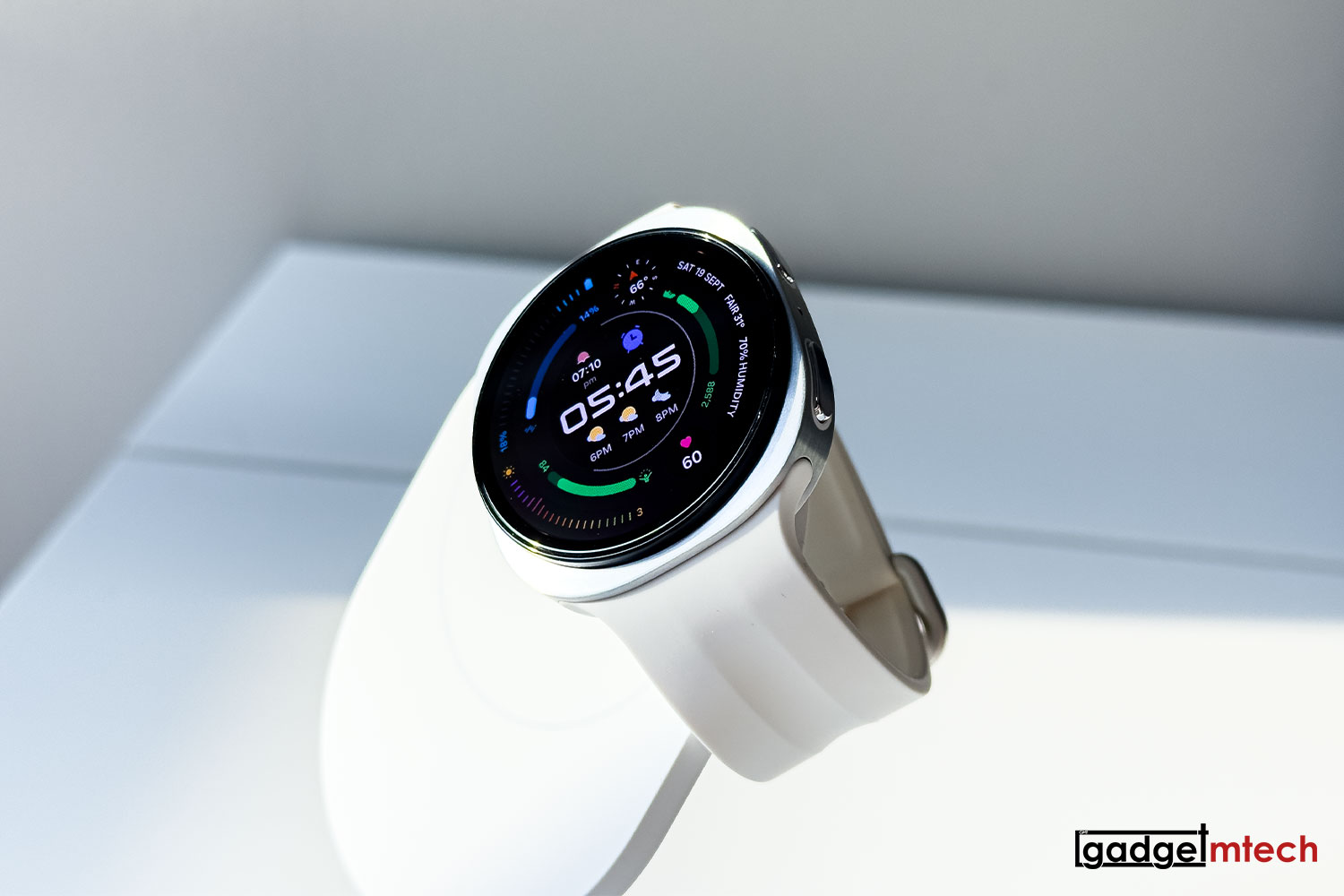
The Galaxy Watch9 retains Samsung’s familiar cushion-shaped watch case, combined with a circular display. It is available in two sizes, 40mm and 44mm, giving users a choice depending on their wrist size and preference.
The overall design remains very much in line with the previous generation. On the right side of the watch, you will find a microphone and two physical buttons, while the speaker is positioned on the left. The buttons provide the usual way of navigating the watch alongside the touchscreen, and their placement remains familiar if you have used a recent Galaxy Watch.
Interestingly, Samsung has not made significant changes to the physical dimensions of the watch. The Galaxy Watch9 retains roughly the same thickness as the previous generation, while the rear continues to feature a similar sensor arrangement.

The 40mm model also retains the same 1.34-inch Super AMOLED display as the previous generation. The display remains one of the strengths of the Galaxy Watch experience, offering good viewing angles, vibrant colours and enough brightness for everyday outdoor use.

One of the more noticeable changes comes with the strap. Samsung has introduced a lighter silicone strap with a centre trench design. It still uses the same buckle and lug system, so the overall experience of changing and wearing the strap remains familiar.
Comfort is generally good, particularly with the smaller 40mm model. The lighter strap also helps make the watch feel less cumbersome during longer periods of wear, especially when sleeping.
However, there is one area that Samsung still needs to improve: the vibration motor.
The vibration feedback remains relatively weak, and there were occasions when I missed notifications simply because the vibration was not noticeable enough on my wrist. This is particularly frustrating when the watch is being used as a notification device, as the whole point is to alert you without needing to constantly look at the screen.
Snapdragon Wear Elite Chipset

With all the features packed into the Galaxy Watch9, how well does it actually handle them?
Samsung has made quite a bit of noise about the chipset powering its latest smartwatch, with the Galaxy Watch9 moving to the Snapdragon Wear Elite platform. Samsung claims that the new chipset delivers up to 32% better CPU performance and 19% better GPU performance compared with the previous generation.
On paper, those numbers certainly sound impressive. But there is an interesting question here: was the previous Exynos W1000 actually a problem?
From my experience, not really. The Exynos W1000-powered Galaxy Watch from the previous generation remains smooth even today. Apps open without much fuss, navigating through the interface is responsive, and general smartwatch usage does not feel like an area where the previous chipset was struggling.
That makes the switch to Snapdragon Wear Elite somewhat interesting. The additional performance is certainly welcome, especially as Samsung continues to add more features and AI-related capabilities to its smartwatches. However, it is difficult to say that the previous generation desperately needed more processing power.
What is even more interesting is how Samsung positioned the new chipset during the launch.
During our preview session for the new devices, the focus was largely on the additional CPU and GPU performance brought by the Snapdragon Wear Elite platform. There was considerably less emphasis on whether the new chipset would provide any meaningful improvement in battery life.
The same was true during the launch event, where Samsung highlighted the performance gains but did not make battery-life improvements a major part of the Snapdragon Wear Elite story.
And after using the Galaxy Watch9, that makes a little more sense. The extra performance is there, but the larger battery on the 40mm model does not translate into significantly longer real-world battery life. In other words, Samsung appears to be using the additional battery capacity to support the higher performance and power requirements of the newer hardware, rather than simply extending the time between charges.
For everyday use, the Galaxy Watch9 feels fast and responsive. There are no obvious performance issues during regular navigation, opening apps or interacting with notifications. But at the same time, the performance upgrade does not fundamentally change how the watch feels compared with the previous generation.
Ultimately, the Snapdragon Wear Elite gives the Galaxy Watch9 more headroom for future features, rather than solving an obvious performance problem from the previous generation.
Features

Health and fitness tracking continue to be a major focus of the Galaxy Watch9. The smartwatch can track a range of health-related measurements, including heart rate, heart rate variability, blood oxygen level, skin temperature and respiratory rate. These measurements work together with Samsung’s broader health-tracking system to provide a better overview of your daily activity and sleep.
One of the newer additions is the ability to calculate a heart health score. Rather than relying on a single measurement, the score takes into account factors such as sleep, daily activity, BMI and vascular load data.
For users who regularly track their health and fitness, this provides another way to look at trends rather than simply checking individual numbers. Of course, these measurements should be treated as general wellness information rather than a replacement for professional medical advice.

Another interesting feature is the integration of Gemini. With the Galaxy Watch9, you can use a wrist-lift gesture to invoke Gemini without having to say “Hey Google” first.
In theory, this is a convenient way to interact with the AI assistant while keeping your hands free. In practice, however, the reliability of the gesture can be inconsistent.
Sometimes the white glow appears as expected, indicating that the watch has recognised the gesture and is ready for the command. Other times, nothing happens. This makes the feature feel less dependable than it should be.
When it works, the concept is certainly useful, particularly when you want to quickly ask something or perform an action without reaching for your phone. But because the activation does not always work, I found myself occasionally wondering whether I had performed the gesture correctly or whether the watch simply did not recognise it.

Samsung has also redesigned its Wearables companion app, giving users a refreshed interface for managing their smartwatch and its settings. There are also new watch face options, including faces with customisable complications.
These complications allow users to put the information they care about directly on the watch face, whether that is activity data, weather information, battery status or other supported widgets.
It is not a revolutionary change, but it does make the watch feel more configurable and personal. For a device that you wear throughout the day, being able to quickly access the information you actually care about is important.
Battery Life

Battery life is perhaps the most interesting part of the Galaxy Watch9 story.
For the 40mm model, Samsung has increased the battery capacity by 20%, going from 325mAh on the previous generation to 390mAh.
On paper, that sounds like a fairly significant improvement. However, in real-world use, the improvement is not particularly noticeable.
I was still getting around one to one and a half days of battery life on a charge, which is broadly similar to what you would expect from the previous generation.
The reason is likely down to the increased power requirements of the new processor and other hardware improvements. So, despite having a considerably larger battery, the Galaxy Watch9 does not suddenly become a smartwatch that can comfortably last several days between charges.
This means charging the watch remains part of the routine. If you are someone who wants to track sleep every night, this can be especially important because you will need to find a suitable time during the day to top up the battery.
The Galaxy Watch9 supports up to 10W wireless charging. In my experience, charging from around 15% to 100% takes approximately an hour and a half.
That is not particularly fast by smartphone standards, but it is reasonable for a smartwatch. A quick charge during a shower or while getting ready can also give you enough battery to get through a significant portion of the day.
Still, I would have liked to see Samsung use the larger battery capacity to deliver a more noticeable improvement in endurance.
Final Words

The Samsung Galaxy Watch9 is an evolution rather than a major redesign. Its familiar squircle-shaped case, circular Super AMOLED display and two-button layout make it immediately recognisable as a Galaxy Watch, while the lighter silicone strap improves comfort without changing the overall wearing experience too much.
The health-tracking features are also becoming increasingly comprehensive, with heart rate, heart rate variability, blood oxygen, skin temperature and respiratory rate tracking, alongside the new heart health score.
The addition of Gemini through a wrist-lift gesture is another interesting step towards making the smartwatch more useful as a standalone device. However, the inconsistent gesture recognition means it does not always feel as seamless as Samsung intends.
Battery life is another area where expectations need to be managed. Despite the 20% increase in battery capacity on the 40mm model, real-world endurance remains around one to one and a half days. The larger battery is therefore more about accommodating the higher power requirements of the newer hardware rather than delivering significantly longer usage.
The Galaxy Watch9 is priced at RM1,499 for the 40mm version in Malaysia, while the 44mm version costs RM1,599. LTE models cost an additional RM300.
For existing Galaxy Watch7 users, the upgrades may not be dramatic enough to make upgrading feel essential. However, for those coming from an older Galaxy Watch or looking to replace an ageing model, the Galaxy Watch9 brings together Samsung’s latest health-tracking features, newer software experience, improved strap design and Gemini integration in a familiar package.
Overall, the Galaxy Watch9 feels like a refinement of an already established formula rather than a complete transformation. For users coming from the Galaxy Watch7 or older, it makes the most sense as a primary upgrade, especially if the newer health features and software improvements are important to you.
Yay
- Impressive display
- Powerful performance
- Better health tracking features
Nay
- Wrist-lift gesture doesn’t always work
- Battery life could be better
Buy Here
About Post Author